
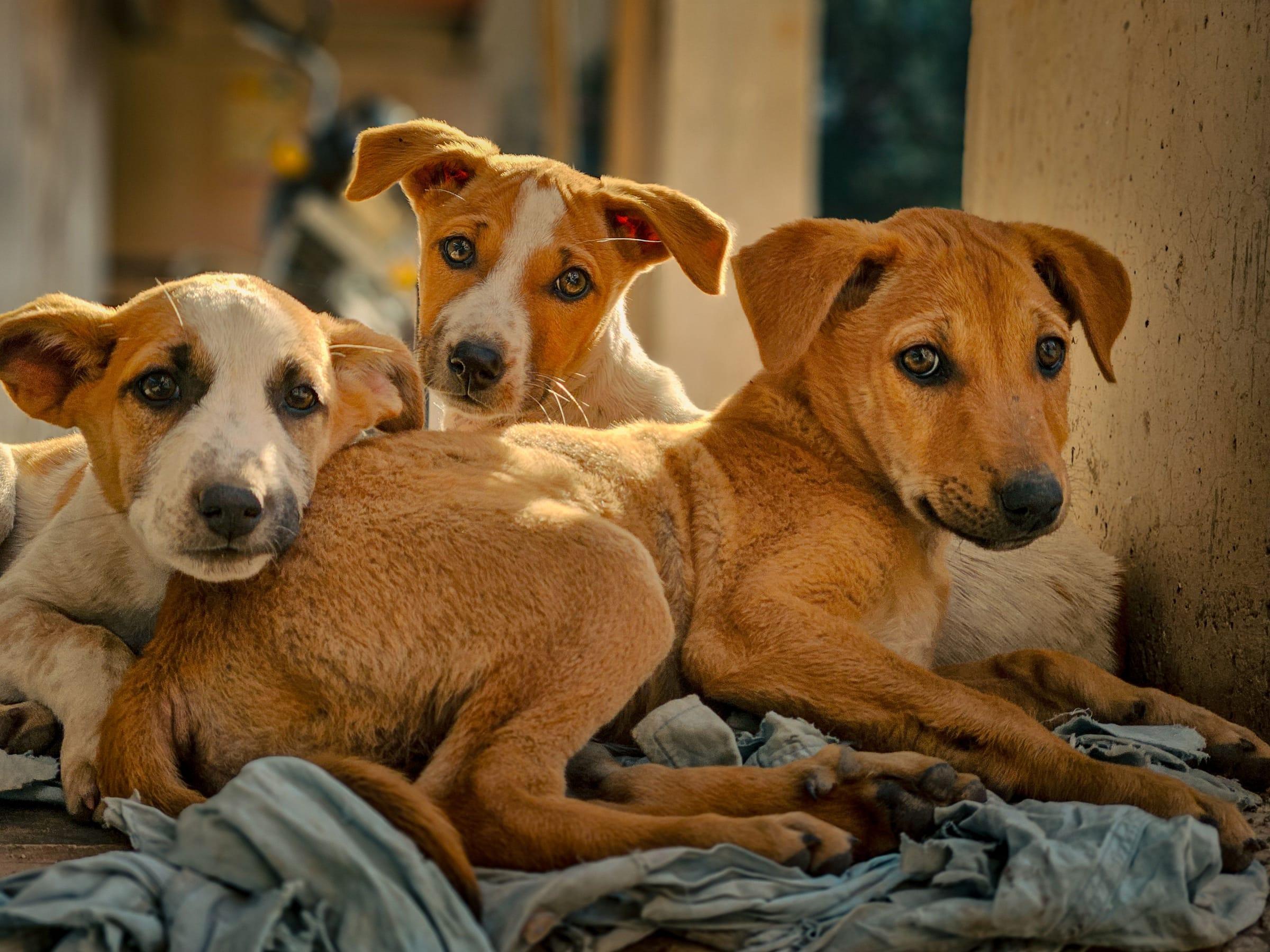
It was raining in Madras in 1959. On a flooded road near his home in T. Nagar, Captain V. Sundaram saw two puppies struggling to stay afloat. He could not walk away. He took them home.1Source 1Blue Cross of India, “Who We Are”Open the source2Source 2The Hindu, “How Animal Aid Association in Madras became Blue Cross of India”, 2 Jan 2026 (updated 20 Jul 2026)Open the source
That small decision is where Blue Cross of India began.1Source 1Blue Cross of India, “Who We Are”Open the source
A wet afternoon in T. Nagar
Captain Sundaram was a pilot. So was his wife, Usha.2Source 2The Hindu, “How Animal Aid Association in Madras became Blue Cross of India”, 2 Jan 2026 (updated 20 Jul 2026)Open the source The Times of India has described her as the first Indian woman pilot of independent India.7Source 7The Times of India, “A pioneering woman pilot from Bengaluru who flew rescue missions during Partition”, 29 Sep 2020Open the source They lived in T. Nagar with their three children, Suresh, Chinny Krishna and Vijayalakshmi.2Source 2The Hindu, “How Animal Aid Association in Madras became Blue Cross of India”, 2 Jan 2026 (updated 20 Jul 2026)Open the source
Two wet puppies in a family home might have stayed a small story. This family kept saying yes.
Shaggy, Grimmy and a house full of animals
The first two puppies were called Shaggy and Grimmy, Chinny Krishna told The Hindu many years later.3Source 3The Hindu, “Madras: love for all creatures great and small”, 21 Aug 2021Open the source They were not alone for long. At one point the house held 60 animals: cats, dogs, goats, bandicoots, and even a pair of baby mongooses rescued from a snake charmer.1Source 1Blue Cross of India, “Who We Are”Open the source
“My mother had to cook for 50-60 animals some days”
Kennels built by children
Sixty animals need somewhere to sleep. Usha and the children built the first few kennels with their own hands.1Source 1Blue Cross of India, “Who We Are”Open the source
The family and their friends formed an informal group, the Animal Aid Association.1Source 1Blue Cross of India, “Who We Are”Open the source According to WellBeing International, Chinny Krishna was almost 15 at the time, and he and his parents were three of its four founding members.4Source 4WellBeing International, “Blue Cross of India: pioneering animal welfare and rabies control for 60 years”, 30 Sep 2024Open the source A teenager helped to start it.
From a family home to Blue Cross of India
In 1964 the group took a new name, Blue Cross of India, and was registered as a society with nine founding members.1Source 1Blue Cross of India, “Who We Are”Open the source For more than twenty years after that, until 1987, it ran entirely on volunteers.3Source 3The Hindu, “Madras: love for all creatures great and small”, 21 Aug 2021Open the source
Madras was becoming a home for animal welfare work in other ways too. The Animal Welfare Board of India was set up in the city in 1962, under the new Prevention of Cruelty to Animals Act, 1960.3Source 3The Hindu, “Madras: love for all creatures great and small”, 21 Aug 2021Open the source
“There are so many charitable institutions for human beings, but so few for animals.”
A kinder answer for street dogs
In the mid-1960s, Blue Cross began a campaign for animal birth control as an alternative to killing street dogs.4Source 4WellBeing International, “Blue Cross of India: pioneering animal welfare and rabies control for 60 years”, 30 Sep 2024Open the source The idea is simple to say and hard to do: sterilise and vaccinate the dogs, so that fewer puppies are born on the streets and fewer dogs carry rabies.4Source 4WellBeing International, “Blue Cross of India: pioneering animal welfare and rabies control for 60 years”, 30 Sep 2024Open the source
It took decades. By Blue Cross’s own account, Madras stopped killing street animals in 1996,5Source 5Blue Cross of India, home page timelineOpen the source and animal birth control became a legal requirement in India in 2001.6Source 6Blue Cross of India, 44th Annual Report 2007–08Open the source
Rules about street dogs are still argued over in India today, and they change. This is the story of how one family’s idea started, not advice about the dogs on your road. What it shows is older and simpler: big, lasting kindness often begins with one person who will not walk past.