Donate

Pages

Donate

Awareness

Be a good neighbour to the animals on your street

Dogs, cats, cows, crows and squirrels share our streets every day. Here is how to look, learn and help, without getting too close.

Only if we understand, can we care. Only if we care, will we help. Only if we help, shall all be saved.

Jane Goodall, Jane Goodall: 40 Years at Gombe (1999), p. 5 · Source
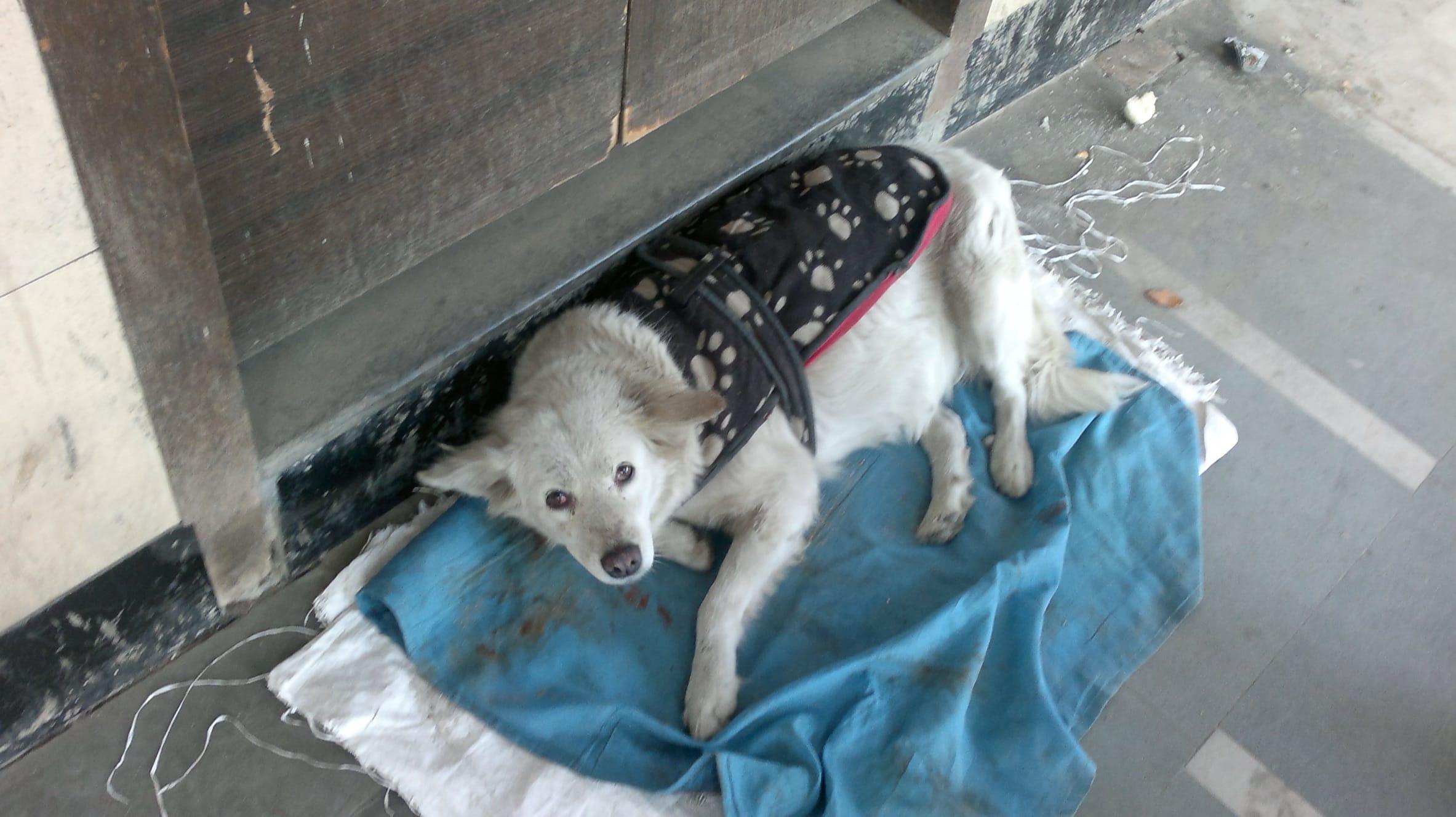
A white street dog in a paw-print winter coat lies on a blue blanket in a Connaught Place doorway, New Delhi.
A street dog in a warm vest on a winter morning.Connaught Place, New DelhiPhoto: Slyronit, CC BY-SA 4.0

Month by month

Kindness for every month

Each month brings its own heat, rain, festivals or babies. Here is the tip for now, and the whole year below.

This month’s kindness · November

Puppy season: give mothers space

Many puppies are born in winter. Their mother keeps watch.

Try this

  1. Do not touch the puppies or go near them.
  2. Wave from far.
  3. Tell a grown-up if one looks hurt.
For grown-ups

Studies in West Bengal found that street dogs raise pups through winter, with a peak in December. Don’t move or carry off puppies, keep the den area calm, and drive slowly near dens. Ask a recognised animal welfare organisation when the mother and pups can be vaccinated and sterilised under the ABC programme. In the south, the northeast monsoon brings rain from October to December: use the June checklist.

Why it matters: In the West Bengal study, mother dogs were “more aggressive immediately following litter production”, so space keeps everyone safe.

If any animal bites or scratches you, tell a grown-up right away.
The whole year

Open any month to read its tips.

JanuaryKite season: plain cotton thread only

This month’s kindness · January

Kite season: plain cotton thread only

Kite string can cut birds. Fly kites only with plain cotton string.

Try this

  1. Fly kites only with plain cotton string.
  2. Do not fly kites at sunrise or sunset, when birds are busy flying.
  3. If a bird is stuck in string, do not touch it. Tell a grown-up right away.
  4. On cold mornings, ask a grown-up to knock on the car bonnet before it starts. A cat may be sleeping inside.
For grown-ups

Use only plain cotton thread, and don’t fly at dawn or dusk. If you find a bird caught in string, cover it gently with a cloth and put it in a ventilated box. Give no food or water, and don’t pull the string out: let a trained rescuer cut it. AWBI’s letter of 11 January 2026 asks every state to “permit only plain cotton thread for kite flying”.

Why it matters: In Gujarat’s 2026 Karuna Abhiyan alone (10–20 January), 16,380 birds hurt by kite strings were treated.

If any animal bites or scratches you, tell a grown-up right away.

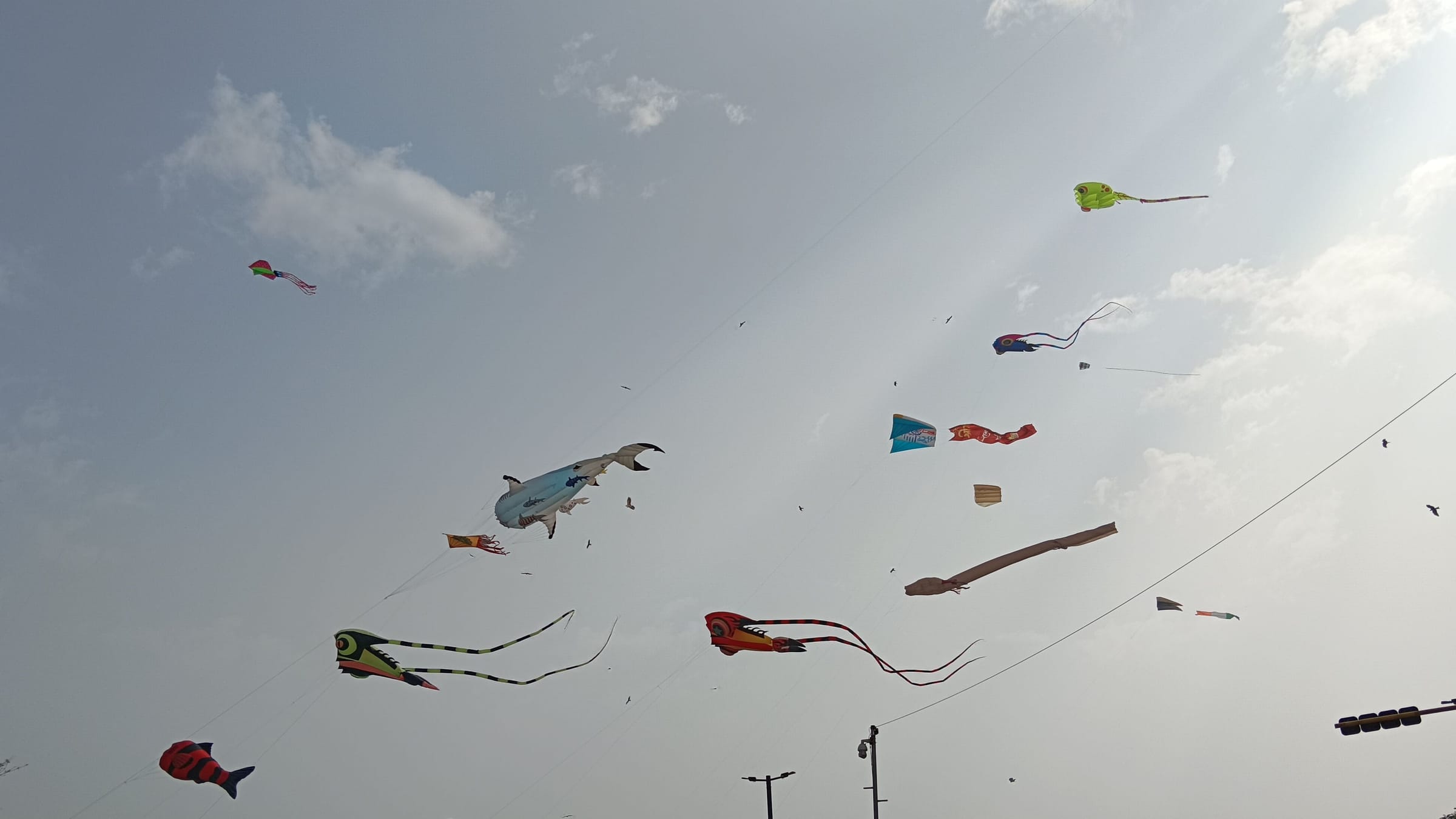
Giant fish- and whale-shaped kites fill the sky over Ahmedabad's riverfront, with black kites wheeling among them.
Sabarmati Riverfront, Ahmedabad, GujaratPhoto: Gopalkhetani, CC BY-SA 4.0
FebruaryBe a bird counter

This month’s kindness · February

Be a bird counter

Be a bird counter. Scientists use lists like yours.

Try this

  1. Sit quietly for 15 minutes. Write down every bird you see or hear.
  2. Ask a grown-up to send your list.
  3. If you see a dead bird, do not touch it. Keep pets away and tell a grown-up.
For grown-ups

The Great Backyard Bird Count 2027 runs 12–15 February: watch for at least 15 minutes and enter the list on eBird or Merlin. Bird Count India runs a Campus Bird Count for schools and colleges alongside it. Photograph birds, not children. Don’t handle dead birds with bare hands, and report clusters of unexplained bird deaths, especially crows, to the nearest veterinary or animal husbandry office.

Why it matters: India’s 2025 count had over 10,000 participants, who recorded 1,086 species: nearly 78% of all bird species found in India.

If any animal bites or scratches you, tell a grown-up right away.

MarchWater bowls: change daily, scrub weekly

This month’s kindness · March

Water bowls: change daily, scrub weekly

Hot days are coming. A bowl of clean water helps birds and animals.

Try this

  1. Ask a grown-up for a wide clay bowl. Fill it with clean water and keep it in the shade.
  2. Change the water every day.
  3. Scrub the bowl once a week so mosquitoes cannot grow in it.
  4. Holi colours are for people, not animals. Never put colour on a dog, cat, cow or bird.
For grown-ups

Use wide, shallow, heavy or earthen bowls that animals cannot tip over, in shade on your own balcony, terrace or garden. Put a stone in the bowl so small birds can perch. Refill with clean water daily, and scrub and dry the bowl at least once a week: Aedes eggs stick just above the waterline and survive drying. At Holi, AWBI asks everyone to “refrain from applying any dry or wet colours on animals, including pets, stray animals, and birds”.

Why it matters: Aedes mosquitoes, which spread dengue, can go from egg to adult in about a week in small containers such as bird baths and pets’ water bowls.

If any animal bites or scratches you, tell a grown-up right away.

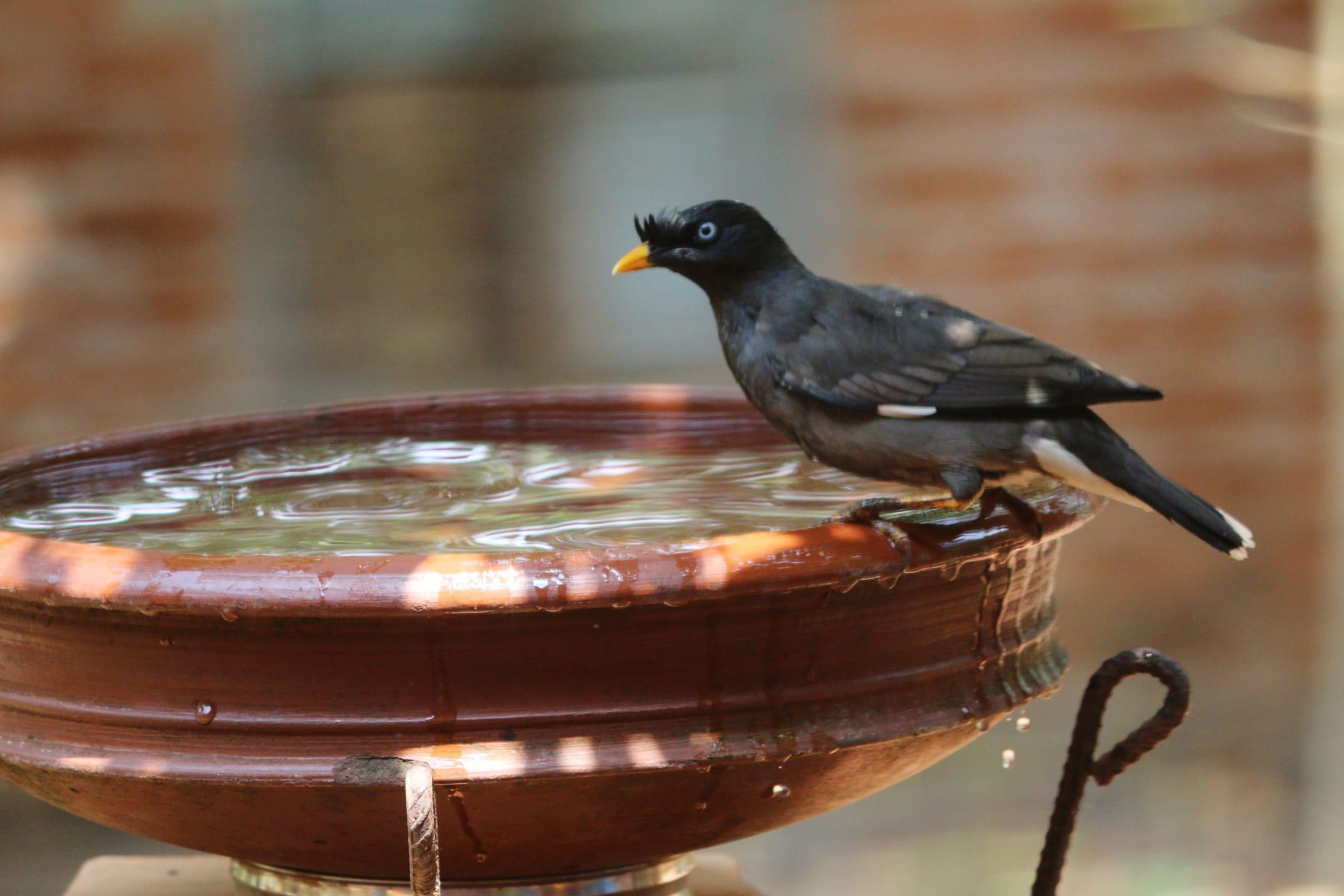
A jungle myna perches on the rim of a terracotta bird bath full of water.
Koottanad, Palakkad district, KeralaPhoto: Shino jacob koottanad, CC BY-SA 4.0
AprilShade, water and a noon break

This month’s kindness · April

Shade, water and a noon break

On hot days, dogs pant and look for shade.

Try this

  1. Keep a water bowl in a shady spot.
  2. Found a baby bird with feathers on the ground? It is learning to fly. Leave it there and watch from far.
  3. If an animal falls down or cannot get up, tell a grown-up fast.
For grown-ups

AWBI’s heat advisory asks for shade all day and water in large earthen pots or stable containers. Watch for “excessive panting, lethargy, drooling, rapid heartbeat, and collapse”, and get a vet at once if you see them. A feathered, hopping baby bird is a fledgling: leave it, keep cats and dogs away, and never drip water into its beak. Draught and pack animals may not pull carts or carry loads between 12 noon and 3 pm when it is hotter than 37 °C (rule 6(3), 1965 Rules).

Why it matters: AWBI warns that dogs and other animals are especially vulnerable to dehydration, heatstroke and burns from hot surfaces.

If any animal bites or scratches you, tell a grown-up right away.

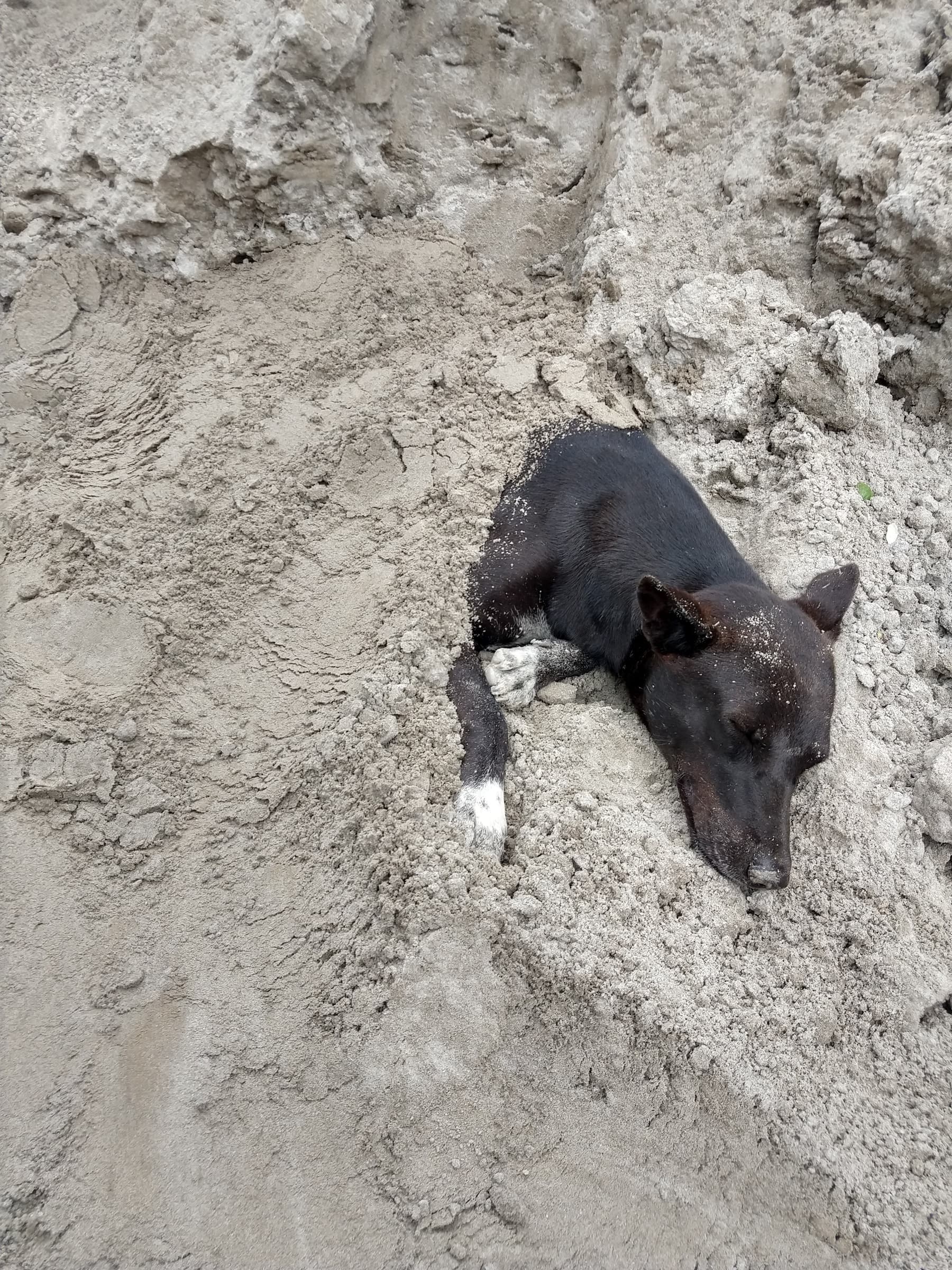
A black street dog sleeps half-buried in cool soil on a hot day.
IndiaPhoto: BabyKumarAnand, CC BY-SA 4.0

Along roads I have had banyan trees planted so that they can give shade to animals and men, and I have had mango groves planted. At intervals of eight krosas, I have had wells dug, rest-houses built, and in various places, I have had watering-places made for the use of animals and men.

Ashoka, Pillar Edict VII (242 BCE), translated by Ven. S. Dhammika (1993) · Source
MayHot ground, hot cars

This month’s kindness · May

Hot ground, hot cars

Hot roads can burn paws.

Try this

  1. Walk pets early in the morning or in the evening.
  2. Never leave a pet in a parked car, not even for a minute.
  3. Hear a loud “ko-EL, ko-EL”? That is a male koel. Listen, then draw the bird you heard.
For grown-ups

NDMA’s heat-wave advice: “Do not leave children or pets in parked vehicles.” Walk dogs in the early morning or after sunset, and keep water bowls in shade. The koel calls from late March until July. For a school sound map, record sounds only, never children’s voices or faces.

Why it matters: IMD says May is the peak heat-wave month in India.

If any animal bites or scratches you, tell a grown-up right away.

JuneRain: knock, look, then drive

This month’s kindness · June

Rain: knock, look, then drive

When it rains, cats and dogs hide under cars.

Try this

  1. Before a car moves, ask a grown-up to knock on the bonnet and look underneath. Every time.
  2. Ask a grown-up if a porch or garage can be a dry spot.
  3. Use a heavy water bowl that will not tip over.
For grown-ups

In rain and cold, animals shelter under and inside parked vehicles. Before starting, walk round, look under the car, check the wheel arches, bang the bonnet or honk, and wait. AWBI’s monsoon advisory asks for clean water in stable, wide metal bowls, for letting street animals shelter in “porches, garages, or any other covered space”, for local vet contacts lined up in advance, and for waterlogging and blocked drains to be reported to the municipality.

Why it matters: AWBI asks that rainy-season shelters be placed “away from pathways, parks, staircases and parking areas where animals are more prone to accidents”.

If any animal bites or scratches you, tell a grown-up right away.

A white-and-tan dog sleeps curled into a ball on a café floor in Khar, Mumbai, out of the monsoon rain.
Khar, Mumbai, MaharashtraPhoto: PlaneMad, CC BY-SA 3.0
JulyPlant a tree for birds

This month’s kindness · July

Plant a tree for birds

In the first week of July, people across India plant trees.

Try this

  1. Ask a grown-up to help you plant a local tree.
  2. Fig trees like the peepal give fruit to koels and many other birds.
  3. In a flood, stay back and let animals pass. Never go into flood water.
For grown-ups

Van Mahotsav runs 1–7 July, timed to the monsoon, when saplings survive best. Ask the municipal or forest nursery for local native species: figs (banyan, peepal), ber and mulberry are on the koel’s menu. Water and protect the sapling until it is established. In floods, drive slowly, don’t stop to watch or film, and report marooned or injured animals to the forest department or a rescue group.

Why it matters: Adult koels eat mostly fruit, including banyan and peepal figs, ber and mulberries.

If any animal bites or scratches you, tell a grown-up right away.

AugustKites around Independence Day

This month’s kindness · August

Kites around Independence Day

Around Independence Day, many kites fly.

Try this

  1. Use only plain cotton string.
  2. Bring all your string home.
  3. If a bird is stuck, do not touch it. Tell a grown-up.
For grown-ups

The January rules hold: plain cotton thread only, and no flying at dawn or dusk. Keep a ventilated box, a towel and a rescue number to hand. Delhi has banned all sharp, synthetic and glass-coated kite thread since 10 January 2017, and Delhi’s fire service attends bird rescues.

Why it matters: Vets and NGOs in Delhi report a spike in birds cut by kite string in the days before Independence Day.

If any animal bites or scratches you, tell a grown-up right away.

Giant fish- and whale-shaped kites fill the sky over Ahmedabad's riverfront, with black kites wheeling among them.
Sabarmati Riverfront, Ahmedabad, GujaratPhoto: Gopalkhetani, CC BY-SA 4.0
SeptemberWorld Rabies Day: what to do if bitten

This month’s kindness · September

World Rabies Day: what to do if bitten

Never touch a dog, cat or monkey you do not know.

Try this

  1. If an animal bites or scratches you, tell a grown-up at once.
  2. Wash the spot with soap and running water for 15 minutes. Then see a doctor the same day.
  3. September is Big Butterfly Month. Count butterflies, draw them, and let them fly free.
For grown-ups

Wash every bite or scratch at once with soap and plenty of running water for 15 minutes, then see a doctor the same day. Never put chilli, oil, turmeric or lime on it. Anti-rabies vaccine and immunoglobulin are free in public health facilities under the National Free Drug Initiative; local shortages happen, so call the clinic first. Vaccinate pet dogs and cats against rabies every year.

Why it matters: World Rabies Day, 28 September, marks the anniversary of the death of Louis Pasteur, who made the first rabies vaccine.

If any animal bites or scratches you, tell a grown-up right away.

OctoberWildlife Week and quieter celebrations

This month’s kindness · October

Wildlife Week and quieter celebrations

Wildlife Week is 2 to 8 October. 4 October is World Animal Day.

Try this

  1. Make a map of the animals near your school.
  2. Draw one animal and write one kind thing you can do for it.
  3. Loud crackers scare animals. Keep your pets inside with you.
For grown-ups

AWBI asks schools to “promote humane education among students, children and the general public”. Ideas that need no touching or feeding: a neighbour-mapping walk, a 15-minute bird count, a water-bowl rota at the school gate. At Diwali and other cracker celebrations, keep pets indoors with ID tags, leave a porch or garage open for street animals, and keep crackers far from feeding spots and roosting trees. Tying or throwing crackers at an animal is cruelty under section 11(1)(a) of the Prevention of Cruelty to Animals Act.

Why it matters: Wildlife Week was conceived by the Indian Board for Wild Life in 1952.

If any animal bites or scratches you, tell a grown-up right away.

NovemberPuppy season: give mothers space

This month’s kindness · November

Puppy season: give mothers space

Many puppies are born in winter. Their mother keeps watch.

Try this

  1. Do not touch the puppies or go near them.
  2. Wave from far.
  3. Tell a grown-up if one looks hurt.
For grown-ups

Studies in West Bengal found that street dogs raise pups through winter, with a peak in December. Don’t move or carry off puppies, keep the den area calm, and drive slowly near dens. Ask a recognised animal welfare organisation when the mother and pups can be vaccinated and sterilised under the ABC programme. In the south, the northeast monsoon brings rain from October to December: use the June checklist.

Why it matters: In the West Bengal study, mother dogs were “more aggressive immediately following litter production”, so space keeps everyone safe.

If any animal bites or scratches you, tell a grown-up right away.
DecemberCold nights: warm beds, never fires

This month’s kindness · December

Cold nights: warm beds, never fires

Winter nights are cold for street dogs and cats.

Try this

  1. Ask a grown-up to put an old blanket or a sack in a dry corner, off the cold floor.
  2. Never light a fire for an animal.
  3. On New Year’s Eve, keep your pets inside with you.
For grown-ups

Give straw, old blankets, jute sacks or mattresses, raised on a pallet or cot, away from wind, in a dry spot, without blocking public paths. No braziers, heaters or bonfires for animals: burns and smoke harm them, and coal burnt in closed spaces makes carbon monoxide. Don’t burn rubbish, because puppies sleep in rubbish heaps.

Why it matters: The government’s cold-wave advisory for animals names newborn, young, sick and weak animals as most at risk.

If any animal bites or scratches you, tell a grown-up right away.
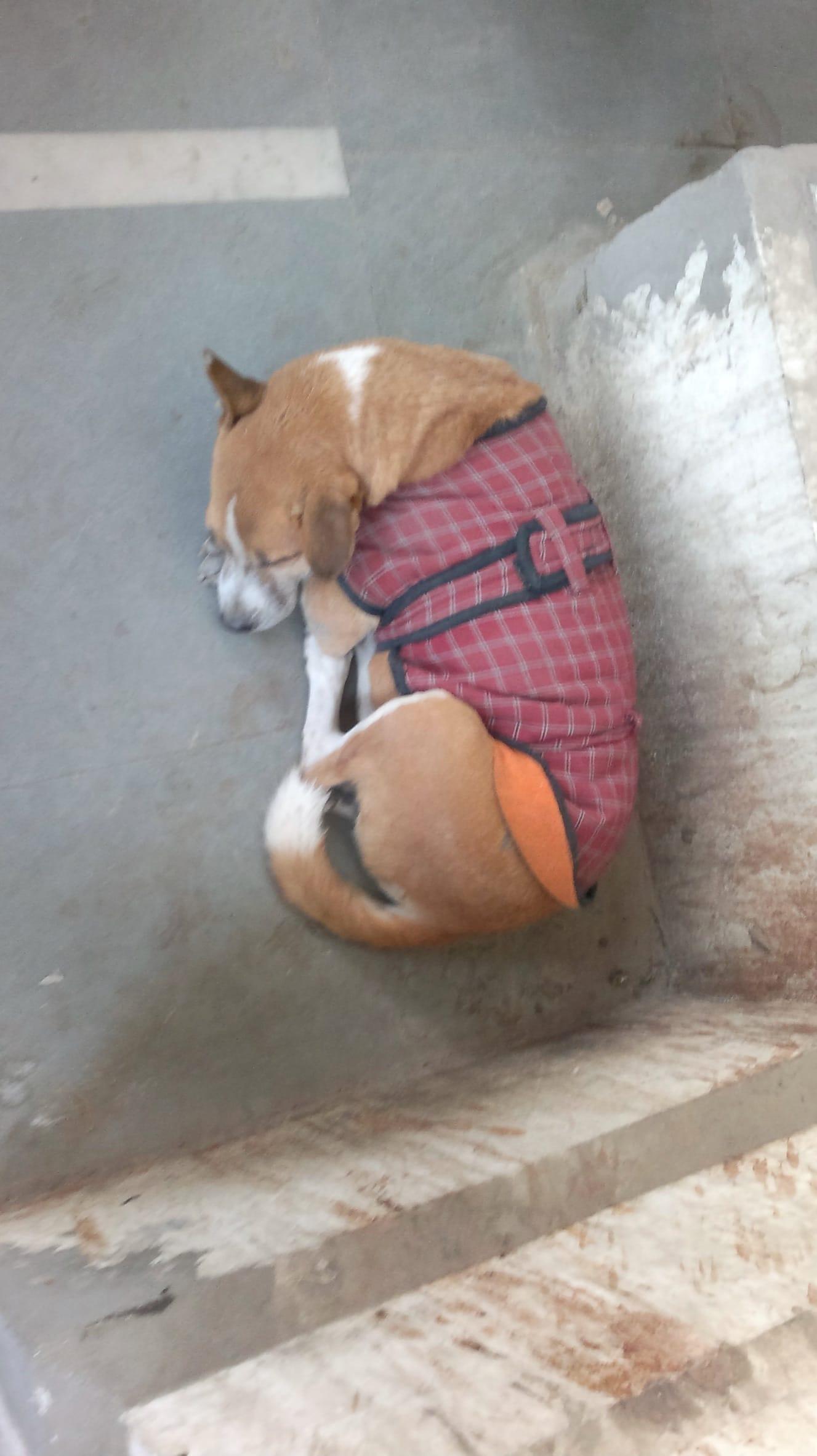
A street dog in a red checked coat sleeps curled up on a step in New Delhi.
Connaught Place, New DelhiPhoto: Slyronit, CC BY-SA 4.0

Street neighbours

Meet the neighbours

Ten animals you can see from a window, a balcony or the school bus. Read the fact, then flip the card to learn how to be a good neighbour.

The rule for every card: look and learn. Don’t touch, chase or feed by hand.

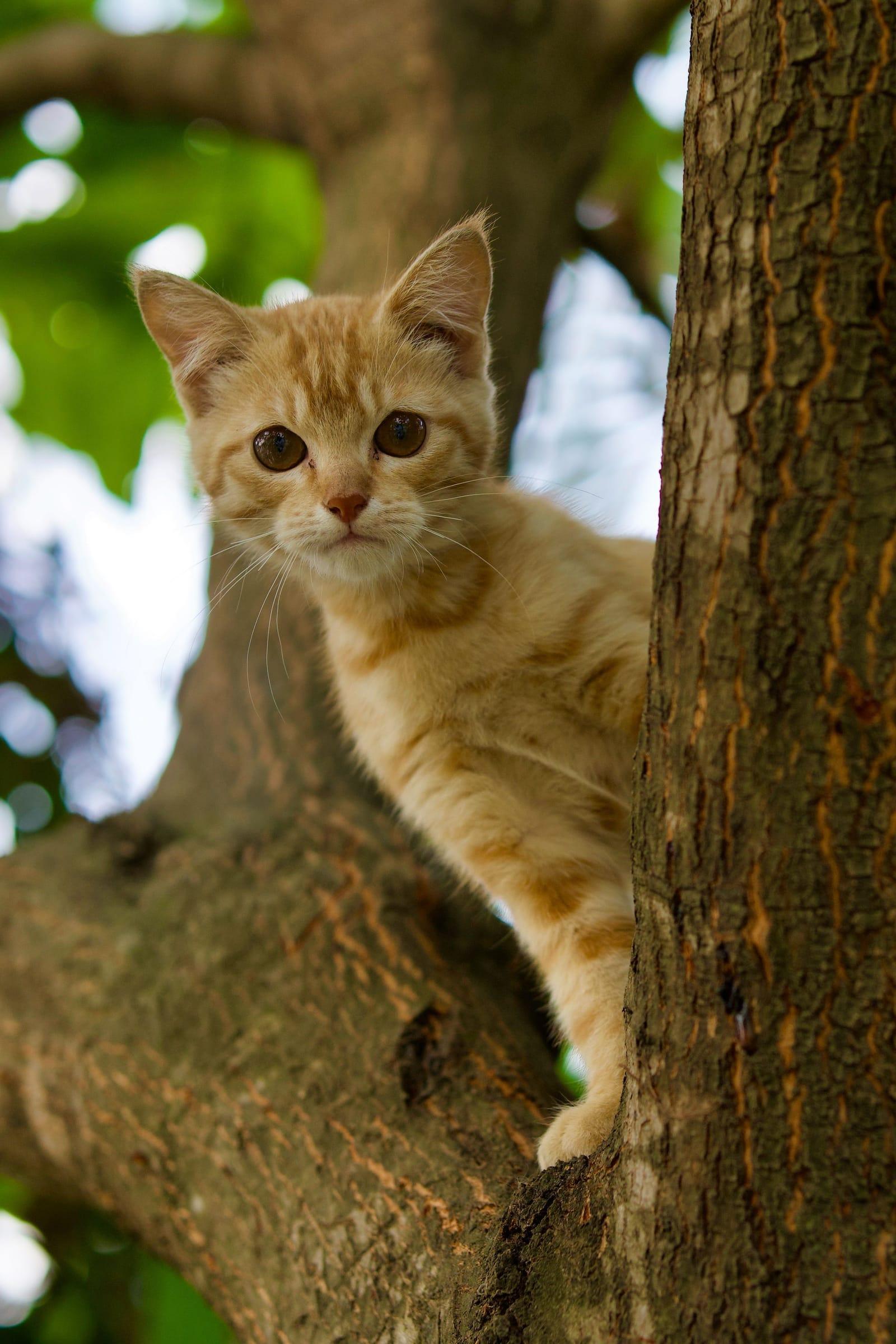
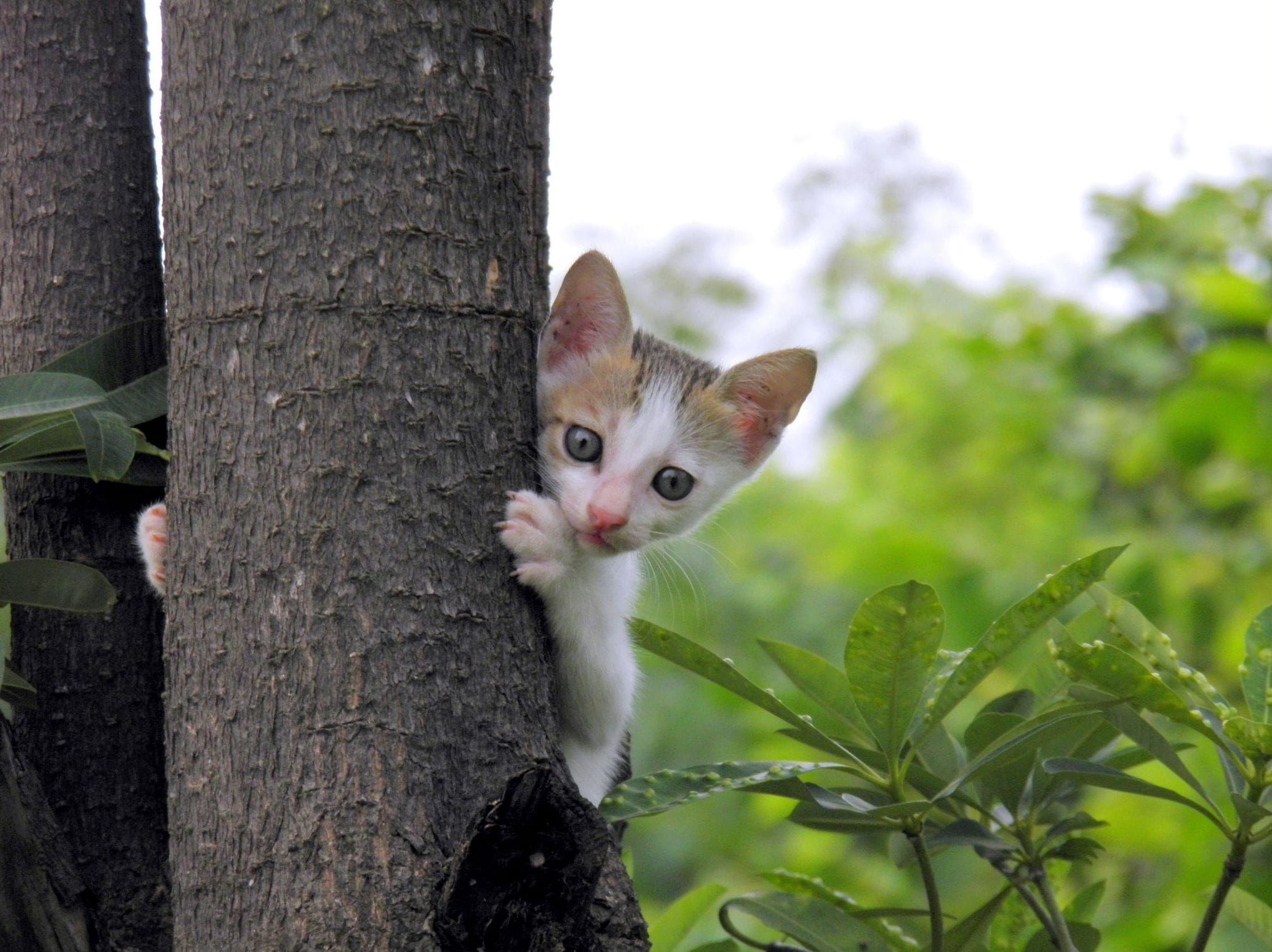
  • A ginger kitten perches in the fork of a tree in Dingore, looking at the camera with soft, bright eyes.

    Street cat

    Felis catus

    Did you know?

    A slow blink is a cat’s friendly hello. Blink slowly at a cat from far away, and it may blink back.

    Dingore, Maharashtra

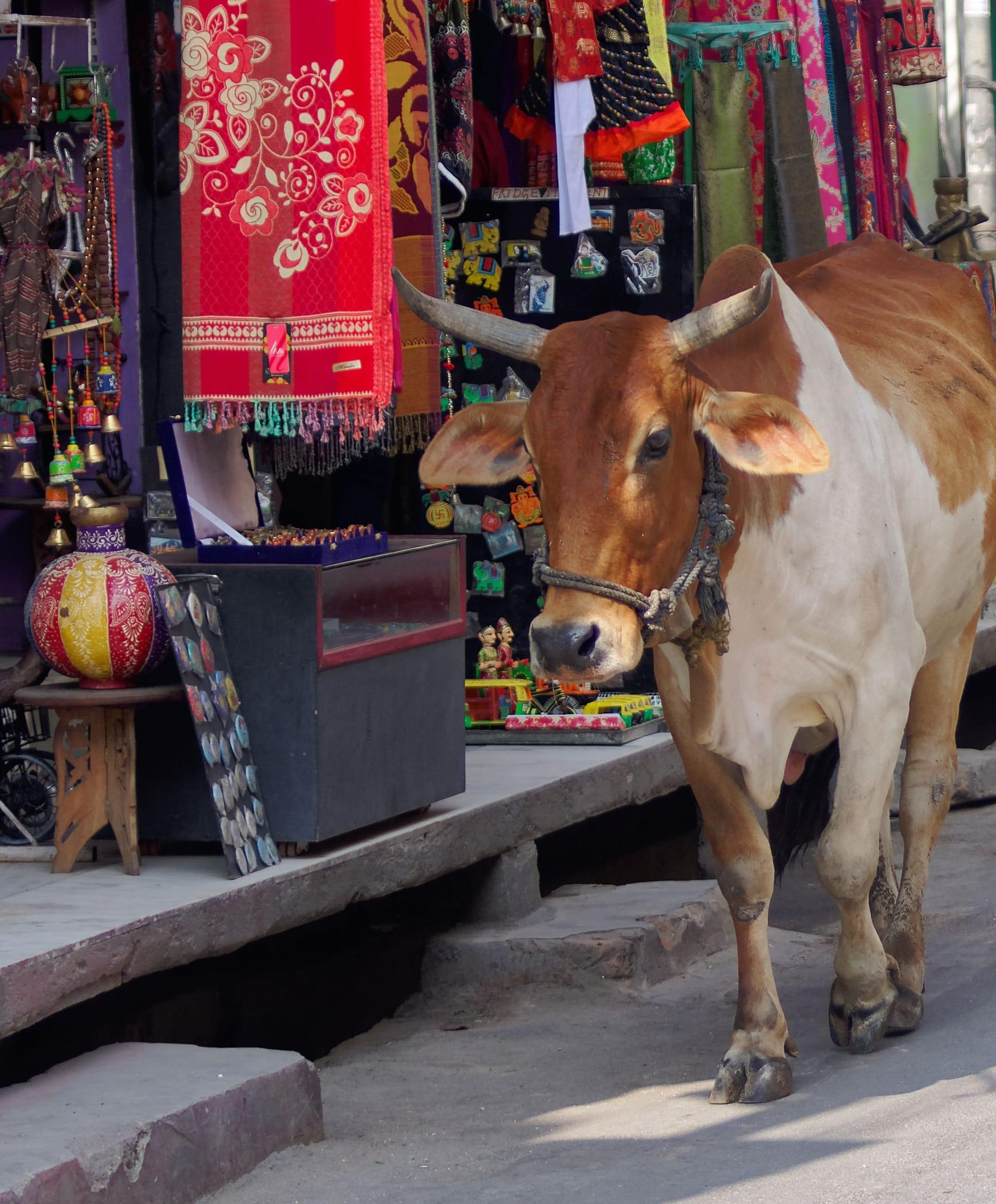
  • A brown-and-white cow walks past a shop of bright textiles on a street in Udaipur.

    Cow

    Bos indicus

    Did you know?

    Indian cows have a hump on their shoulders. Scientists still aren’t sure what it is for.

    Udaipur, RajasthanPhoto: Jakub Hałun, CC BY-SA 4.0

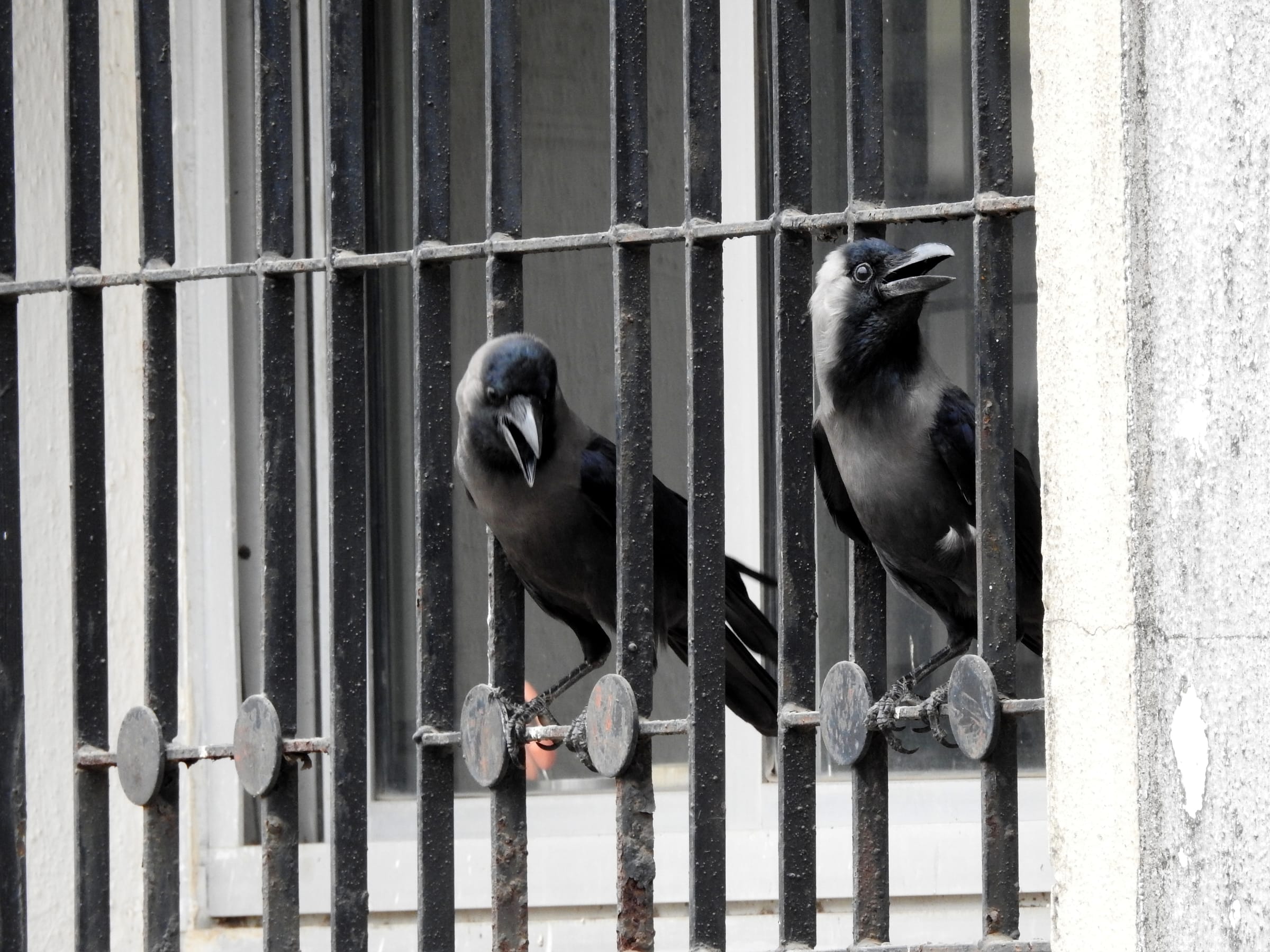
  • Two house crows perch inside a window grill in Mumbai, one with its beak open.

    House crow

    Corvus splendens

    Did you know?

    Crows can remember a face for years. In a study of American crows, they still scolded a “scary” mask almost three years later.

    Mumbai, MaharashtraPhoto: Dr. Raju Kasambe, CC BY-SA 4.0

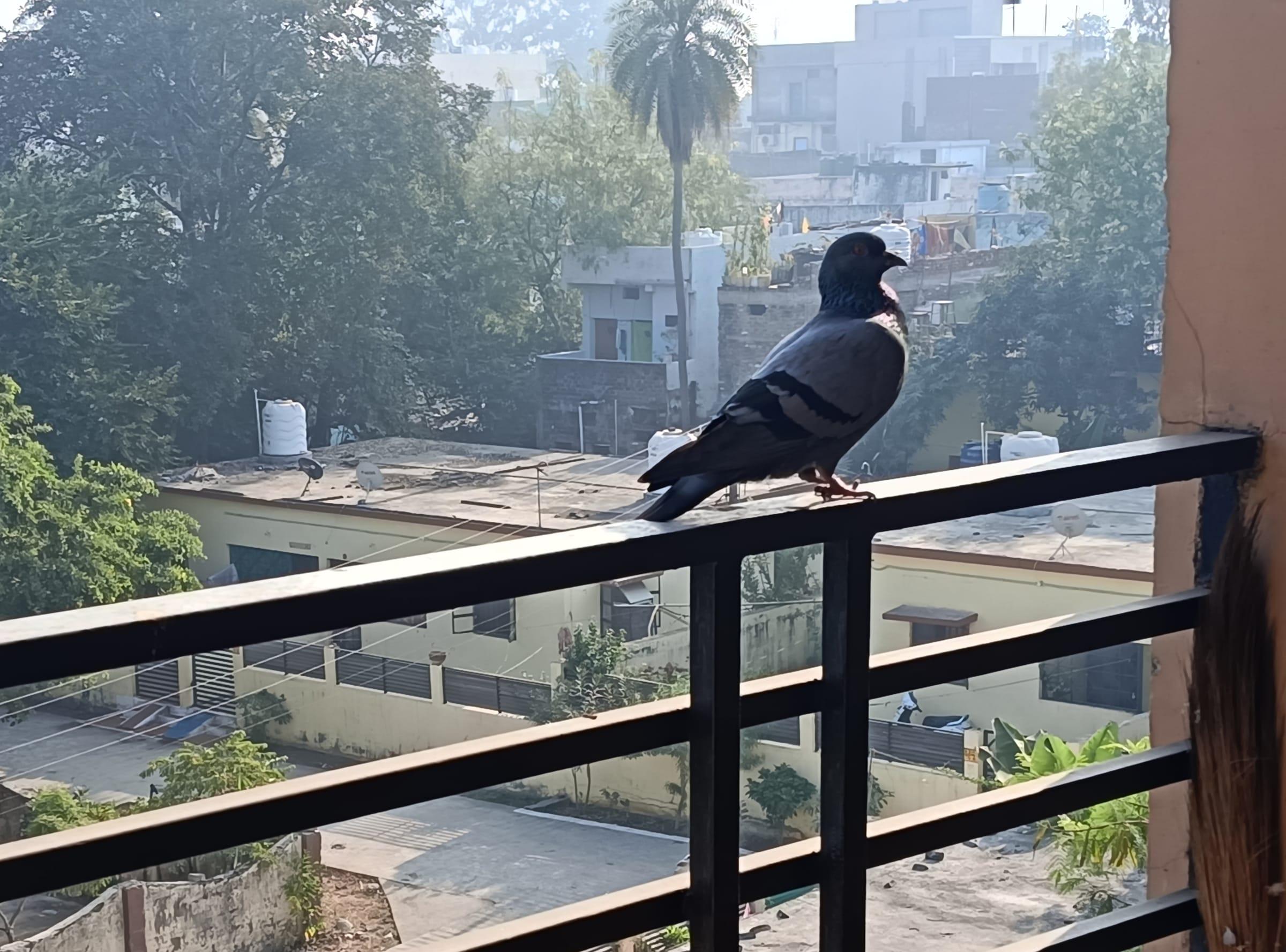
  • A rock pigeon sits on a balcony railing above rooftops and trees.

    Rock pigeon

    Columba livia

    Did you know?

    Pigeons can be art experts. In a test, they learned to tell Monet’s paintings from Picasso’s, even ones they had never seen.

    IndiaPhoto: Kaushlendrapathe, CC BY 4.0

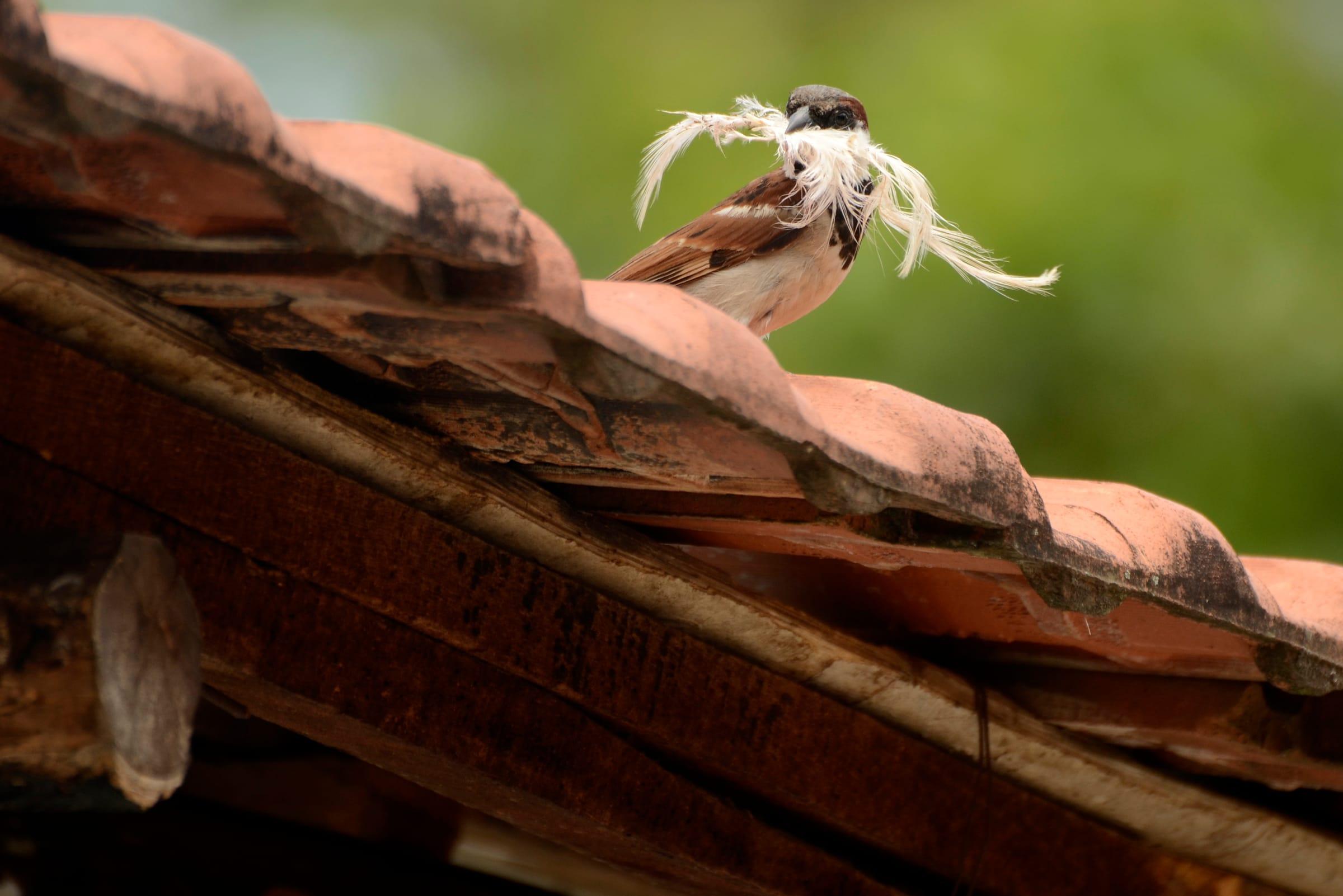
  • A male house sparrow carries a beakful of soft nest material on a tiled roof.

    House sparrow

    Passer domesticus

    Did you know?

    Sparrows have lived beside farmers for about 10,000 years. Their bodies even changed to digest grain.

    Coimbatore district, Tamil NaduPhoto: PJeganathan, CC BY-SA 4.0

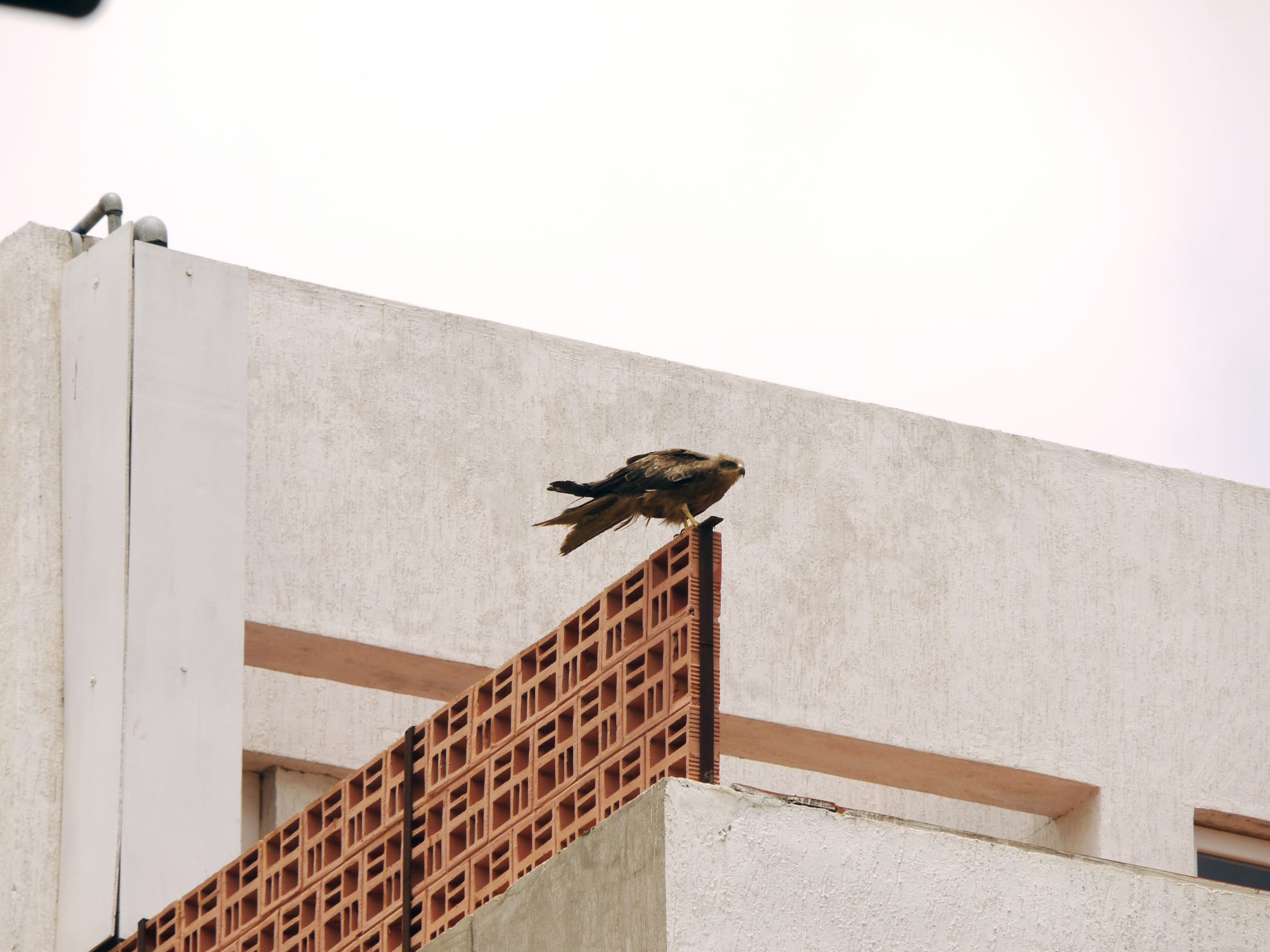
  • A black kite perches on the corner of a building in Bengaluru.

    Black kite

    Milvus migrans

    Did you know?

    Some black kites that spend winter in Delhi fly over the Himalayas, more than 6 km up in the sky.

    Bengaluru, KarnatakaPhoto: Burkhard, CC BY 3.0

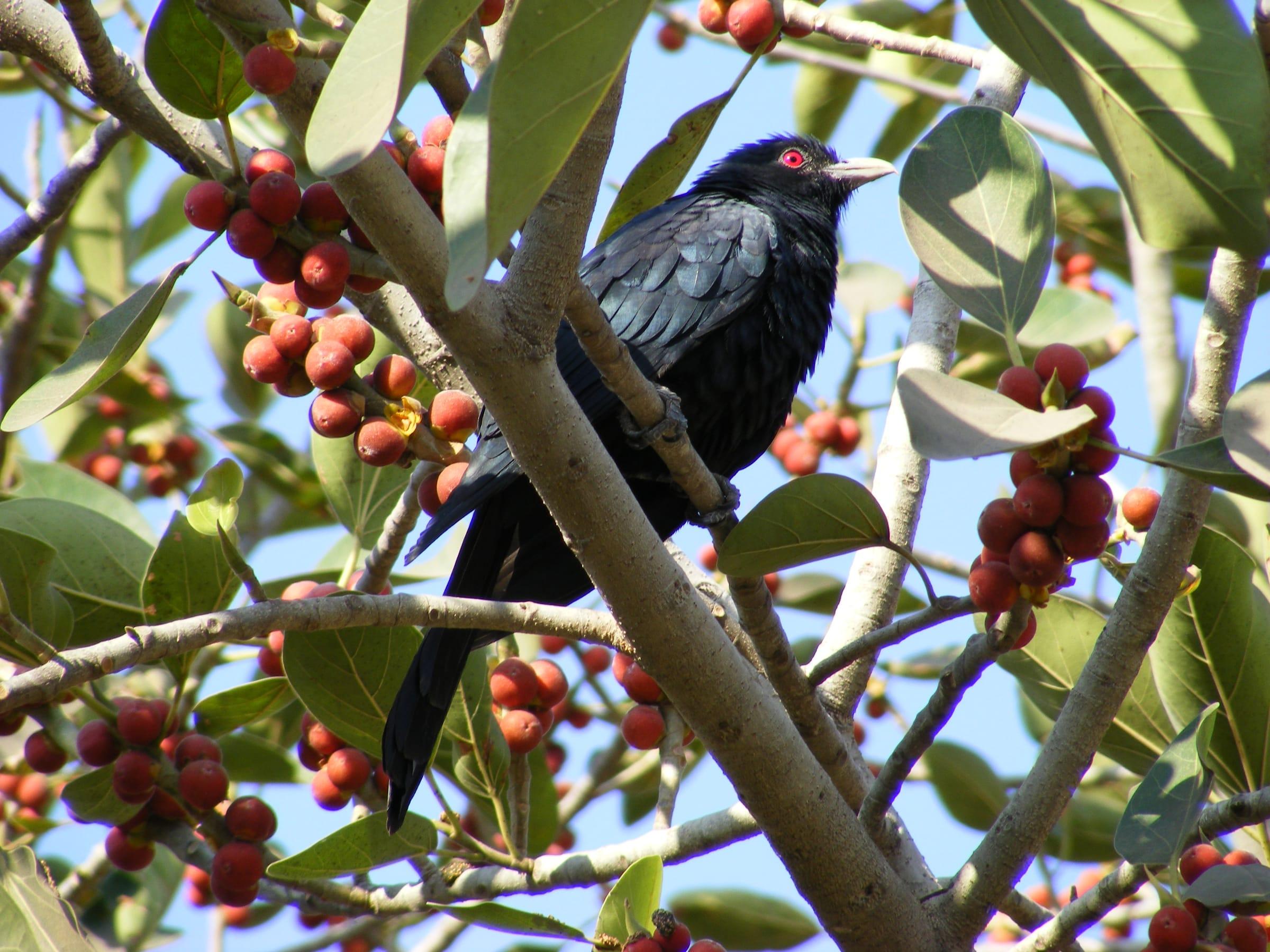
  • A male Asian koel, glossy black with a red eye, sits among ripe red figs.

    Asian koel

    Eudynamys scolopaceus

    Did you know?

    Koels never build nests. A mother koel lays her egg in a crow’s nest, and the crows raise the chick.

    MaharashtraPhoto: Dr. Raju Kasambe, CC BY-SA 4.0

  • On house sparrows

    Don't drive those sparrows out of your veranda; they won't hack into your computer.

    Ruskin Bond, Ruskin Bond's Book of Nature (2004), “The Civilized Wilderness”

Kindness that helps

Kind on the inside, helpful on the outside

Some kind ideas hurt animals by mistake. Swap them for these.

The bird thinks it is an act of kindness to give the fish a lift in the air.

Rabindranath Tagore, Stray Birds (1916), no. 123 · Source
  • Instead ofmilk for a street cat

    Trya bowl of fresh water. Most grown-up cats can’t digest milk.

  • Instead ofbread for birds

    Trya wide, shallow bowl of water. Change it every day.

  • Instead ofsweets and rotis for cows

    Tryputting food waste in a closed bin, never in plastic on the street.

  • Instead ofpicking up a baby bird on the ground

    Tryleaving it be. Its parents are usually close by, watching.

  • Instead ofHoli colours on a dog, even “safe” ones

    Trykeeping colours for people. No colours on animals at all.

  • Instead ofglass-coated or nylon kite string

    Tryplain cotton thread, and picking up loose string after.

If you find a hurt or scared animal

Stop, step back, tell a grown-up

You don’t have to fix it yourself. The kindest thing a child can do is get the right grown-up.

  1. Stop. Stay back. Do not touch the animal.
  2. Tell a grown-up you trust, right now.
  3. Keep other people and pets away. Speak softly.
  4. Help the grown-up find a rescue group or a vet.
  5. Never give a hurt bird water or food.
  6. If you were bitten or scratched, wash it and see a doctor today.
For grown-ups: what to do next
  1. Stay safe first: Don’t put yourself at risk on roads, roofs or near power lines. Scared animals bite. Wear thick gloves and long sleeves, and bring a second person.
  2. Keep it calm: Keep children and pets away. Avoid noise, staring and handling.
  3. Call before you act: Ring your saved local rescue, an animal welfare organisation or a vet. For cattle and other livestock, many states run a 1962 mobile veterinary unit; hours vary. Describe the exact location: vague calls slow rescuers down.
  4. If you are asked to contain a small bird or animal: Cover it gently with a towel and place it in a cardboard box with air holes, never a wire cage. Keep the box warm, dark and quiet. Give no food or water. If it is caught in kite string, don’t pull: let a trained rescuer cut it.
  5. Leave these to trained help: Birds of prey such as kites, monkeys, snakes, cattle, and any dog or cat that is aggressive or behaving strangely.
  6. Babies are usually not lost: Fledglings on the ground are normally fine: their parents are nearby. Watch kittens from far away for hours before deciding they are alone. Keep away from puppies with their mother.
  7. Several dead or sick birds: Don’t touch them. Report them to the local veterinary or animal husbandry office.
  8. Cruelty: Beating, poisoning or tying crackers to animals are offences under the PCA Act, s.11 and the BNS, s.325. Call the police. You can also tell AWBI or your district SPCA.

Sources

What the law says

Caring is also a duty

In India, hurting an animal on purpose is against the law. Anyone who looks after an animal must keep it well.

It shall be the duty of every person having the care or charge of any animal to take all reasonable measures to ensure the well-being of such animal and to prevent the infliction upon such animal of unnecessary pain or suffering.

Prevention of Cruelty to Animals Act, 1960, section 3 · Source
More for grown-ups

Section 3 of the Prevention of Cruelty to Animals Act, 1960 puts a duty of care on every person in charge of an animal. Section 11 lists acts of cruelty, such as beating, overloading and abandoning animals.

Article 51A(g) of the Constitution lists compassion for living creatures among every citizen’s fundamental duties. It is a value to practise, not a right a court enforces.

Read the Act on India Code

Kindness pledge

Make your kindness pledge card

Pick a street neighbour and a promise. Your card is made right here on your device, ready to print or pin up.

Optional. Only your first name.

Pick a street neighbour
Pick a promise

Your card

My kindness pledge. I promise to keep a water bowl clean and change it every day. My street neighbour: Indie dog.

Your card stays on this device. Nothing is sent to us or saved.

When weaker men you front with threat'ning brow,Think how you felt in presence of some stronger foe.

Thiruvalluvar, Thirukkural, kural 250, translated by G.U. Pope (1886) · Source

In simple wordsBefore you shoo an animal, remember a time someone bigger scared you.